Knowing When to Stop: Recognizing Signs of Fatigue and Overplay
One of the most valuable skills any casino player can develop is the ability to recognize when it’s time to stop. Gambling is designed to be exciting, fast-paced, and immersive — qualities that make it easy to lose track of both time and money. While playing longer may feel thrilling, ignoring the signs of fatigue or overplay can quickly turn entertainment into regret.
In this guide, we’ll explore why knowing when to stop is so important, how to spot the early warning signs, and what strategies you can use to maintain control.
Why Knowing When to Stop Is Essential
The real difference between casual gamblers and disciplined players lies not in how they start but in how they finish. Every casino game is structured with a house edge, which means the longer you play, the more likely the casino benefits. Without clear boundaries, players often spend beyond their budget, let emotions dictate decisions, and chase losses that only deepen the hole.
Key reasons stopping matters:
- Protects your bankroll from unnecessary depletion.
- Keeps gambling fun instead of stressful.
- Prevents fatigue-driven mistakes that cost money.
- Encourages long-term healthy gaming habits.
Walking away doesn’t mean defeat — it means taking control and securing your enjoyment.
Common Signs of Fatigue
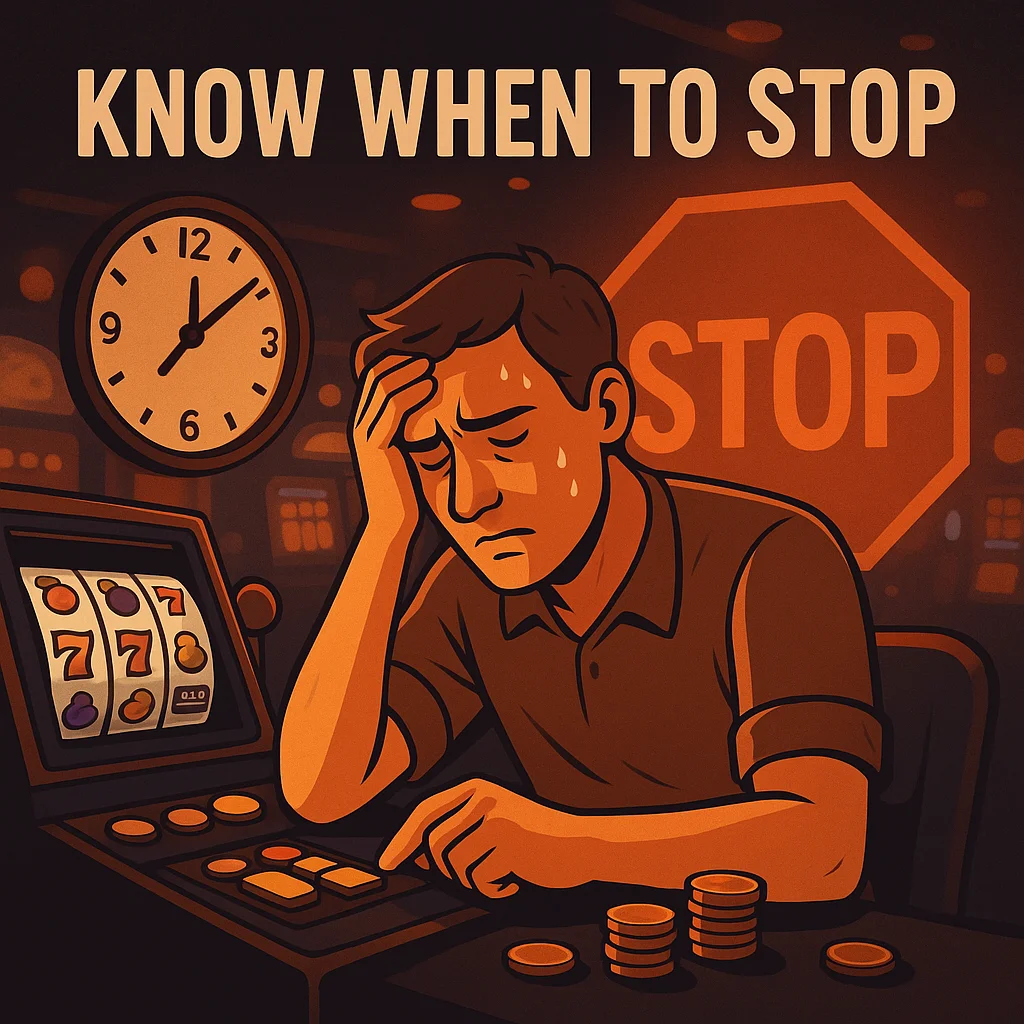
Fatigue builds slowly, and many players underestimate its impact. Casinos are deliberately designed to blur time, with no clocks, dim lighting, and stimulating sounds. Online platforms also create an endless loop of fast rounds. Recognizing when your body and mind are tired can save your bankroll.
Physical Signs
- Frequent yawning or eye strain.
- Reduced reaction speed, especially in decision-based games like poker.
- Slouching, restlessness, or physical discomfort.
Mental and Emotional Signs
- Forgetting simple rules or repeating mistakes.
- Irritation over small losses or minor delays.
- Playing automatically out of habit, without real excitement.
Example: A slot player who once celebrated every bonus round may notice they’re now spinning out of routine, no longer enjoying the experience. That’s a red flag.
Recognizing Overplay
While fatigue is about tiredness, overplay is about compulsion. It occurs when players ignore their limits and keep gambling despite warnings from their budget or emotions.
Warning Signs
- Chasing losses – raising bet sizes after losing to recover quickly.
- Ignoring time – playing for hours without noticing.
- Exceeding budget – depositing more after reaching your set limit.
- Emotional rollercoaster – wild mood swings tied to wins and losses.
- Neglecting responsibilities – skipping meals, sleep, or tasks just to keep playing.
Overplay is dangerous because it shifts the purpose of gambling from enjoyment to pressure, leading to financial and psychological harm.
Psychological Traps That Keep Players Going
Casinos rely on powerful psychological triggers to encourage longer sessions. Being aware of them helps you resist their pull.
- The Gambler’s Fallacy: Believing a win is “due” after many losses, even though outcomes remain random.
- The Sunk Cost Fallacy: Thinking you must continue because of how much money you’ve already lost.
- The Near-Miss Effect: Feeling motivated to continue after “almost” winning, even though a near-miss is still a loss.
- Illusion of Control: Believing personal habits, rituals, or lucky charms influence outcomes.
These traps create the false idea that persistence will guarantee success — but in reality, every round is independent.
Practical Strategies to Know When to Stop
Awareness is only useful when paired with action. Here are effective strategies that help players walk away at the right time:
1. Set Time Limits
Plan your session length in advance, such as one hour. Use phone alarms or casino reality checks to remind you when it’s time to quit.
2. Respect Stop-Loss and Win Goals
Set a maximum loss you can tolerate and a realistic profit goal. Once you reach either, leave the session.
3. Take Breaks Regularly
Every 45–60 minutes, step away from the screen or table. A short walk, drink, or stretch resets your focus and prevents fatigue.
4. Monitor Your Mood
Ask yourself: Am I still having fun, or am I just trying to recover losses? If the latter, stop immediately.
5. Use Responsible Gaming Tools
Most online casinos offer deposit caps, session reminders, and self-exclusion features. Use them to stay within safe boundaries.
The Benefits of Stopping Early
Stopping at the right moment doesn’t just prevent harm — it creates long-term advantages.
- Preserves your bankroll: Your money lasts across multiple sessions.
- Improves performance: A rested mind makes better decisions.
- Secures profits: Walking away at your goal ensures you keep your winnings.
- Boosts enjoyment: Gambling stays fun instead of turning stressful.
- Supports balance: Healthy gaming habits align with work, family, and social life.
Early stopping is not a sign of weakness but of wisdom and self-control.
Conclusion
Knowing when to stop is one of the most important skills in gambling. Fatigue and overplay can creep in quietly, but their consequences are costly. By recognizing physical and mental warning signs, avoiding psychological traps, and using practical strategies, you protect both your bankroll and your well-being.
Remember: the smartest players aren’t those who play the longest — they are the ones who know when to walk away.